Minecraft APK 2026: The Complete Beginner’s Guide to Android’s Most Legendary Sandbox Game
Why Minecraft Is Still the Game Everyone Is Talking About in 2026
Download Minecraft APK 2026 latest version for Android and explore Survival, Creative, multiplayer, crossplay, new updates, beginner tips, and gameplay features. Fifteen years after its original release, Minecraft APK has over 140 million monthly active players. That number is not a relic — it has grown every single year since Microsoft acquired Mojang Studios in 2014. In 2026, the Android version alone accounts for tens of millions of those players, making Minecraft APK one of the most actively played mobile games on the planet.
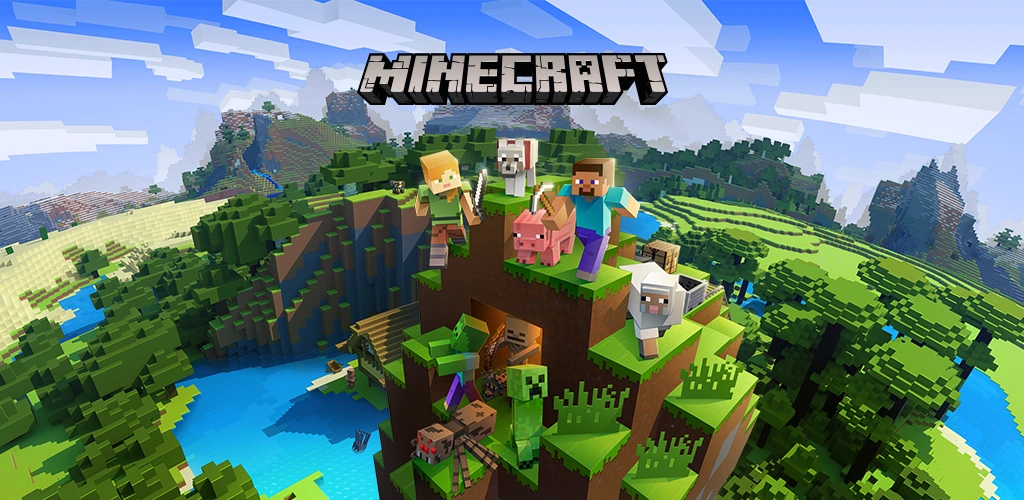
If you have never played Minecraft, or you tried it years ago and found it overwhelming, the question worth asking is: what keeps people coming back? The answer is not a cinematic story, a ranked competitive mode, or cutting-edge visuals. Minecraft holds its audience because it gives every player a genuinely blank canvas and the freedom to decide what kind of game they want to play inside it. You can spend 200 hours building a medieval kingdom without ever fighting a single enemy. You can dedicate your entire first week to mining as deep as the world goes. You can set up a server and survive with friends. The game never tells you that you are playing it wrong.
This guide is written for two types of readers. First, people who have heard about Minecraft their whole life and want to finally understand what the game actually is before downloading it. Second, people who have downloaded the APK but feel lost the moment the world generates and they have no idea what to do. By the end of this guide, you will have a clear picture of every game mode, a practical first-day survival plan, and enough context to actually enjoy the experience from the very first session.
What Is Minecraft APK — And What Exactly Is Bedrock Edition?
When people search for Minecraft APK, they are looking for the Android version of Minecraft Bedrock Edition — the mobile-optimized version of the game developed by Mojang Studios and published by Microsoft. The name Pocket Edition (MCPE) appears on many older websites and still gets used casually, but Mojang officially rebranded the mobile version to simply Minecraft or Minecraft Bedrock Edition several years ago.
Bedrock Edition is one of two main versions of Minecraft. The other is Java Edition, which runs on Windows, macOS, and Linux and is the version you have probably seen on YouTube videos from popular gaming creators. The key difference is the underlying code: Java Edition is written in Java and runs on desktop computers. Bedrock Edition is written in C++ — a lower-level, more performance-efficient language — which is exactly why it runs smoothly on Android phones and tablets alongside Xbox, PlayStation, Nintendo Switch, Windows 10/11, and iOS.
The C++ engine gives Bedrock Edition meaningful advantages on mobile hardware. It loads chunks faster, manages memory more efficiently, and maintains stable frame rates even on mid-range phones with 3-4GB of RAM. The latest stable build as of June 2026 is version 1.26.23, with a beta version 1.26.40.20 available for players who want to test upcoming features before official release.
The Four Game Modes — Choosing How You Want to Play
Survival Mode — The Core Minecraft Experience
Survival mode is the version of Minecraft that defines the game for most players. You spawn into a randomly generated world with nothing but the clothes on your character’s back. Every resource you need — wood, stone, food, metal — must be gathered by hand. Every tool must be crafted. Every shelter must be built before the sun goes down and hostile creatures emerge in the dark.
Survival mode has a health bar and a hunger bar. Taking damage from enemies, falling from heights, drowning, or burning reduces your health. Your hunger bar depletes as you move and sprint, and when it reaches zero, your health starts draining slowly. Keeping both bars managed through exploration, farming, and careful combat is the ongoing challenge that gives Survival its tension and satisfaction.
The progression in Survival is open-ended but logical. You start with wood tools and a dirt shelter on day one. Within a week of play you might have iron armor and a mine shaft. Within a month you could have a functioning base, an enchanting table, diamond gear, and a Nether portal. There is a technical ‘end’ to the game — defeating the Ender Dragon — but most players treat it as a milestone in an ongoing world rather than a finish line.
Creative Mode — Building Without Limits
Creative mode removes health, hunger, and resource gathering entirely. Your inventory contains every block and item in the game in unlimited quantities. You fly freely. Enemies cannot hurt you. The entire mode exists for one purpose: building whatever you can imagine without friction.
Some players spend thousands of hours exclusively in Creative mode — constructing full cities, recreating real-world landmarks block by block, designing intricate systems using Minecraft’s redstone circuitry, or crafting massive terrain sculptures. Creative mode is Minecraft as a 3D pixel art canvas, and the community produces work in it that is genuinely impressive.
Adventure Mode — Playing Custom Maps
Adventure mode is not a game mode you would choose for your first session. It is designed specifically for playing custom maps created by other players, where the map designer controls what you can and cannot interact with. When you download a community-made adventure map — a story campaign, a puzzle game, a parkour challenge — it typically forces you into Adventure mode to preserve the intended experience.
Hardcore Mode
Hardcore mode only exists in Java Edition, not in Bedrock Edition or the Android APK. It is a version of Survival where you have one life — if you die, the world is permanently deleted. It is mentioned here because players occasionally search for it on mobile and cannot find it.
| Game Mode | Key Feature | Best For |
| Survival | Gather resources, manage health and hunger | Players who want challenge and progression |
| Creative | Unlimited resources, fly freely, no damage | Builders and designers |
| Adventure | Restricted interaction — for custom maps | Downloading and playing community maps |
| Spectator (Java only) | Fly through blocks, observe only | Not available in Bedrock/Android APK |
| Hardcore (Java only) | One life — death deletes the world | Not available in Bedrock/Android APK |
| Multiplayer Survival | Same as survival but with friends online | Realms, servers, or LAN play |
| Multiplayer Creative | Collaborative building on shared worlds | Realms Plus, featured servers |
| Mini-game servers | Custom gameplay: bed wars, sky block, etc. | Official Featured Servers in-app |
Your First Day in Minecraft Survival — A Step-by-Step Walkthrough
The first day in a new Minecraft world is where most beginners make their worst mistakes. The most common one is not having a shelter before nightfall. Hostile mobs — Zombies, Skeletons, Creepers, and Spiders — spawn in darkness and will actively hunt you. On your first night without shelter, surviving is genuinely difficult. This step-by-step plan prevents that.
The First Five Minutes: Wood Is Everything
When you spawn, look around immediately. Find the nearest trees. Walk up to a tree trunk and hold your finger on the block (on mobile) or hold the mine button (on PC). Wood logs begin breaking and collecting into your inventory. Collect at least 10-15 logs from the first trees you find. Do not stop until you have that many.
Open your crafting menu (the crafting icon in your inventory). Convert logs into Wooden Planks — each log gives you 4 planks. Then craft a Crafting Table using 4 planks arranged in a 2×2 square. Place the Crafting Table on the ground and interact with it. This opens the full 3×3 crafting grid, which is required for almost every recipe in the game.
Minutes Five to Fifteen: Tools and Stone
- Craft a Wooden Pickaxe using 3 planks across the top row and 2 sticks below. Sticks come from 2 planks stacked vertically.
- Find the nearest stone (grey blocks, usually found at the surface in hills or exposed cliff faces) and mine 20-30 stone blocks with your wooden pickaxe.
- Return to your Crafting Table and upgrade immediately: craft a Stone Pickaxe, Stone Axe, and Stone Sword. Stone tools are twice as durable and fast as wooden ones.
- Mine coal — small black-flecked stone blocks. Coal is essential for torches and for cooking food.
- If you see animals (cows, pigs, chickens, sheep), kill 2-3 of them with your stone sword. Collect the raw meat they drop.
- Craft a Furnace using 8 stone blocks in a ring pattern on the Crafting Table. Place it down and use it to cook your raw meat. Cooked food restores significantly more hunger than raw.
Before Sunset: Build Your First Shelter
Watch the sky. The sun moves from east to west and when it gets low on the horizon you have roughly two in-game minutes before night falls and mobs begin spawning. Your first shelter does not need to look good — it needs to exist.
Dig a hole into the side of a hill or stack up walls of dirt or cobblestone around you. Four walls and a ceiling is sufficient. Place torches inside from your coal and sticks to light the interior — mobs cannot spawn in lit spaces. Create a door using 6 wooden planks in a 2×3 rectangle on the Crafting Table and place it at your entrance. You have survived night one.
Understanding the Full Minecraft Progression — From Day One to the Ender Dragon
Minecraft survival has a logical progression that most beginners discover by accident rather than by design. Understanding it in advance means you spend less time wandering aimlessly and more time enjoying each stage of the game.
Early Game — Wood, Stone, Iron (Days 1-7)
The early game centers on establishing basic security and upgrading your tool tier. After stone tools, the next milestone is iron. Iron ore spawns underground between Y-levels 16 and 64, with the best concentration around Y-54 in the 2026 Bedrock Edition. Smelt iron ore in your furnace to get iron ingots, then craft iron armor, an iron sword, and an iron pickaxe. Iron tools last much longer than stone and iron armor dramatically reduces damage from mobs.
Mid Game — Diamonds, Enchanting, Nether (Days 7-30)
Diamond ore generates at Y-levels -58 to -64 in Bedrock Edition. Mining at Y-59 gives peak diamond density. Use your iron pickaxe to mine diamond ore — wooden or stone pickaxes cannot collect it. Five diamonds allows you to craft a Diamond Pickaxe, which is required for mining Obsidian. Twelve obsidian blocks and a Flint and Steel lets you build a Nether Portal — a glowing purple gateway to the Nether dimension, a dangerous but resource-rich alternate world.
Before entering the Nether, build an Enchanting Table. You need 4 obsidian blocks, 2 diamonds, and 1 Book. Surround the enchanting table with bookshelves (15 for maximum power) and start enchanting your diamond gear. Enchantments like Protection on armor and Sharpness or Smite on your sword make a significant difference in mid-game combat.
Late Game — The End, Ender Dragon, and Beyond
The Ender Dragon lives in The End — a separate dimension accessible through a Stronghold, an underground structure found using Eyes of Ender. Craft Eyes of Ender from Blaze Powder (from Nether Blazes) and Ender Pearls (from Endermen). Throw the Eyes into the air and follow where they travel — they point toward the nearest Stronghold. Inside the Stronghold, find the End Portal frame, fill each empty slot with an Eye of Ender, and step through.
Defeating the Ender Dragon requires destroying the Ender Crystals on top of the obsidian pillars surrounding the arena (these heal the dragon) and then focusing attacks on the dragon when it hovers over the central fountain. A bed, which explodes violently in The End dimension, is a popular speedrunning tool for dealing massive damage to the dragon quickly.
| Game Stage | Goal | Key Resources Needed |
| Day 1 | Build shelter, gather food, make basic tools | Wood, stone, coal, raw food |
| Days 2-5 | Establish food farm, craft full stone gear | Seeds, water, stone, torches |
| Days 5-10 | Mine iron, craft iron tools and armor | Iron ore, furnace, coal |
| Days 10-20 | Find diamonds, build Enchanting Table | Diamond ore, obsidian, bookshelves |
| Days 20-30 | Enter Nether, collect Nether resources | Flint, steel, fire resistance potions |
| Days 30-50 | Find Stronghold, open End Portal | Eyes of Ender, full diamond armor |
| End game | Defeat Ender Dragon | Strong gear, beds or ranged weapon |
| Post-game | Build freely, explore, try new seeds | Anything — the world is yours |
Crossplay and Multiplayer on Minecraft APK — How to Play With Friends
One of Bedrock Edition’s most important advantages over Java Edition is crossplay. Bedrock Edition runs on Android, iOS, Xbox, PlayStation, Nintendo Switch, and Windows 10/11 simultaneously, and all of these platforms can play together in the same world. If your friend plays on Xbox and you play on Android, you can both be in the same survival world at the same time without any workarounds.
Java Edition, by contrast, only supports crossplay between PC players — Windows, Mac, and Linux. A Java player cannot natively join a Bedrock world. So if you are on Android and your friends are on Java Edition PC, crossplay is not natively supported. A third-party tool called GeyserMC allows Bedrock players to join Java servers through a proxy, but it requires server-side setup and does not work for all features.
Realms — The Simplest Way to Play With Friends
Minecraft Realms is Mojang’s official subscription-based server hosting service. For Bedrock Edition, Realms costs $7.99 per month and supports up to 10 simultaneous players. The world is always available — friends can join even when you are offline. Realms Plus, the premium tier, includes a library of marketplace content, additional maps, and texture packs bundled with the subscription.
LAN Play — Free Multiplayer on the Same Network
If you and your friends are on the same WiFi network, LAN play is built into Bedrock Edition and completely free. One player opens their world and enables LAN sharing from the pause menu. Other players on the same network see the world appear automatically in their game’s Friends tab. No subscription, no setup, no cost.
Touch Controls on Android — How to Play Comfortably
Minecraft’s touch controls on Android are functional but take adjustment if you are used to a keyboard and mouse. The default layout places movement on the left side of the screen and camera control on the right, with action buttons for jumping, crouching, and interacting positioned in between. Most experienced mobile players recommend spending 30-60 minutes in a Creative mode world specifically to get comfortable with the touch layout before starting a Survival world where control precision matters more.
Minecraft Bedrock Edition also supports physical controllers. Connecting a Bluetooth gamepad — any Xbox, PlayStation, or generic Android controller — to your phone and launching Minecraft automatically activates controller support with a layout identical to the console versions. Many players who find touch controls frustrating discover that a $20-30 Bluetooth controller completely transforms the experience on Android.
The Minecraft Marketplace — What It Is and What It Costs
Built directly into the Android app, the Minecraft Marketplace is Mojang’s official storefront for community-created content — skins, texture packs, world templates, and mini-game maps. Purchases use Minecoins, the in-game currency bought with real money. 330 Minecoins cost approximately $1.99 USD; 1720 Minecoins cost $9.99 USD.
Content in the Marketplace ranges from $1.99 to $9.99 for most items. Free items are available periodically. The quality ranges significantly — some Marketplace creator packs are genuinely impressive with hundreds of hours of content, while others are thin collections of skins barely worth the purchase. Checking community reviews before spending Minecoins is worthwhile.
Marketplace content is entirely optional. None of it affects core gameplay or gives any competitive advantage in survival or multiplayer. The base game experience is complete without spending anything beyond the initial game purchase.
Frequently Asked Questions About Minecraft APK
Is Minecraft APK free on Android?
Minecraft is a paid game. The full Bedrock Edition costs approximately $6.99 USD on the Google Play Store. A free trial is available that lets you experience a limited portion of the game before committing to the purchase. Many APK download sites offer modified versions that claim to be free — these are unofficial, not supported by Mojang, and carry security risks from unverified sources.
What is the latest version of Minecraft APK in 2026?
The latest stable release is Minecraft Bedrock Edition 1.26.23 (also referred to in some contexts as 26.23). A beta build 1.26.40.20 is available for players enrolled in the beta program, focused on Sulfur Cave behavior fixes and Texture Streaming improvements as of June 2026.
Can I play Minecraft APK offline?
Yes. Single-player survival and creative worlds work fully offline. You need an internet connection only for multiplayer features like Realms, Featured Servers, and LAN play with friends. The initial download and account sign-in require internet access.
Does Minecraft APK require a Microsoft account?
Yes. Signing into a Microsoft account is required to access multiplayer features, Realms, and Marketplace purchases. Single-player worlds can technically be started without an account on some versions, but Mojang strongly ties the full experience to Microsoft account integration as of 2026.
What Android version does Minecraft APK need?
Minecraft Bedrock Edition requires Android 5.0 or higher for installation. For the best performance with the 2026 updates including Vibrant Visuals and improved underground rendering, Android 8.0 or higher with at least 3GB of RAM is recommended. The game runs on older devices but performance noticeably degrades on devices with less than 2GB RAM.
Is Minecraft Bedrock Edition the same as Minecraft Java Edition?
They are the same game in terms of core gameplay but different in technical architecture, modding support, and platform availability. Bedrock Edition (Android, console, Windows 10/11) supports crossplay between all those platforms but has a more restricted modding ecosystem compared to Java Edition. Java Edition supports thousands of community mods through Forge and Fabric but runs only on PC and cannot natively crossplay with Bedrock.
Conclusion
Minecraft APK in 2026 is the same game that captured the imagination of hundreds of millions of players over 15 years — and it has not stagnated. The 2026 update cycle’s Chaos Cubed content adds Sulfur Caves, new underground exploration scenarios, and improved mobile rendering that makes the game feel genuinely fresh even for returning players. The C++ Bedrock engine continues to run more smoothly on Android than most mobile games that have half its visual complexity.
The beauty of Minecraft is that there is no right way to play it. This guide gave you the framework — the game modes, the survival progression, the crossplay mechanics — but what happens in your world once you download it is entirely up to you. Start in Survival. Punch the first tree you see. Build something terrible for your first shelter and something better on day two. The game teaches itself through doing, and the first session almost always ends the same way: with a player who started skeptical and lost track of two hours without realizing it.